
loading
Laparoscopic Ovarian Cyst Removal

Laparoscopic Ovarian Cyst Removal

  • Category : Laparoscopic Ovarian Cyst Removal


What is an Ovarian Cyst?

An ovarian cyst is a fluid-filled sac that forms within or on the surface of an ovary.

Most ovarian cysts are benign and may disappear naturally over time. However, larger or persistent cysts can cause discomfort and complications, requiring medical or surgical intervention.

Ovarian cysts may occur in women of all ages but are more common during the reproductive years.


Types of Ovarian Cysts

Functional Cysts

These are the most common type of ovarian cysts and develop as part of the normal menstrual cycle.

They include:

  • Follicular cysts
  • Corpus luteum cysts

Most functional cysts disappear without treatment.


Dermoid Cysts

Dermoid cysts contain tissues such as:

  • Hair
  • Fat
  • Skin
  • Teeth

They are usually benign but often require surgical removal.


Endometriomas

Also called chocolate cysts, these develop due to endometriosis.

They may cause:

  • Severe menstrual pain
  • Infertility
  • Pelvic pain
  • Pain during intercourse

Cystadenomas

These cysts arise from ovarian tissue and may contain watery or mucus-like fluid.

Some cystadenomas can become quite large and require surgical removal.


Polycystic Ovaries

Women with polycystic ovaries have multiple small cysts associated with hormonal imbalance and conditions such as PCOS.

Treatment depends on symptoms and fertility goals.


Symptoms of Ovarian Cysts

Small ovarian cysts often cause no symptoms.

Larger cysts may cause:

  • Pelvic pain
  • Lower abdominal pain
  • Bloating
  • Feeling of heaviness in the abdomen
  • Pain during periods
  • Pain during intercourse
  • Irregular menstrual cycles
  • Frequent urination
  • Difficulty conceiving
  • Sudden severe pain if the cyst ruptures or twists

Persistent symptoms should be evaluated by a gynecologist.


When is Laparoscopic Ovarian Cyst Removal Needed?

Dr. Kanika Jain may recommend Laparoscopic Ovarian Cyst Removal in Karol Bagh if:

  • The cyst is large.
  • The cyst persists for several months.
  • It causes pain or discomfort.
  • There is suspicion of endometriosis.
  • The cyst interferes with fertility.
  • The cyst is increasing in size.
  • There is risk of ovarian torsion.
  • The cyst has suspicious ultrasound features.

The treatment plan is individualized according to the patient's age, symptoms, and reproductive goals.


Diagnosis Before Surgery

Before recommending surgery, Dr. Kanika Jain performs a detailed evaluation.

Medical History

The doctor may discuss:

  • Menstrual history
  • Fertility plans
  • Previous pregnancies
  • Family history
  • Existing medical conditions
  • Duration and severity of symptoms

Pelvic Examination

A physical examination helps assess:

  • Pelvic tenderness
  • Size of the cyst
  • Mobility of the ovaries
  • Presence of pelvic masses

Ultrasound Examination

Pelvic ultrasound is the primary diagnostic tool for ovarian cysts.

It helps determine:

  • Size of the cyst
  • Type of cyst
  • Internal structure
  • Blood flow pattern
  • Presence of multiple cysts

Blood Tests

Certain blood tests may be recommended, including:

  • Complete blood count
  • Hormonal profile
  • Thyroid function tests
  • Tumor markers such as CA-125 in selected patients

MRI Scan

MRI may be advised when:

  • Ultrasound findings are unclear
  • Complex cysts are present
  • Detailed surgical planning is required

Procedure of Laparoscopic Ovarian Cyst Removal

The surgery is performed under general anesthesia.

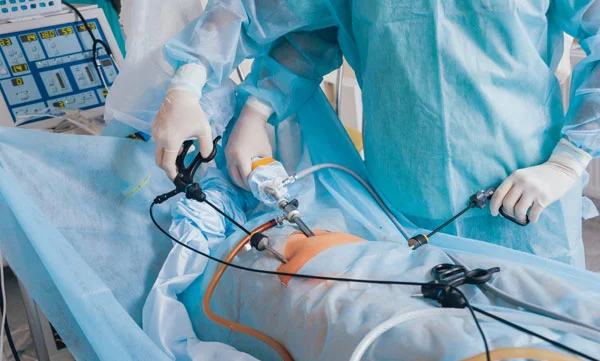
Step 1: Small Incisions

Three to four tiny incisions are made in the abdomen.

A laparoscope and specialized instruments are inserted through these openings.


Step 2: Examination of Pelvic Organs

The surgeon carefully examines:

  • Ovaries
  • Uterus
  • Fallopian tubes
  • Pelvic cavity
  • Surrounding tissues

Step 3: Removal of the Cyst

The cyst is separated from healthy ovarian tissue and removed carefully.

The aim is to:

  • Preserve the ovary
  • Maintain fertility
  • Remove the cyst completely
  • Minimize damage to healthy tissue

Step 4: Retrieval of the Cyst

The cyst is placed inside a specimen retrieval bag and removed through a small incision.

This technique helps prevent spillage and improves safety.


Step 5: Closure

The small incisions are closed with sutures or surgical glue.

The scars are usually tiny and heal very well.


Benefits of Laparoscopic Ovarian Cyst Removal

This minimally invasive surgery offers several advantages:

  • Smaller incisions
  • Minimal scarring
  • Less postoperative pain
  • Faster recovery
  • Shorter hospital stay
  • Preservation of ovarian function
  • Better cosmetic results
  • Reduced blood loss
  • Lower risk of infection
  • Faster return to normal activities

Recovery After Surgery

Recovery is generally quick and comfortable.

Most women:

  • Walk within a few hours after surgery
  • Go home within 24 hours
  • Resume light activities within a few days
  • Return to work within 1 to 2 weeks
  • Experience minimal postoperative discomfort

Recovery advice includes:

  • Adequate rest
  • Avoid heavy lifting
  • Follow medication instructions
  • Maintain a balanced diet
  • Attend follow-up appointments

Can You Get Pregnant After Ovarian Cyst Removal?

Yes. In most cases, laparoscopic ovarian cyst removal preserves healthy ovarian tissue and maintains fertility.

Women with:

  • Endometriomas
  • Fertility-related cysts
  • Symptomatic ovarian cysts

may experience improved reproductive outcomes after surgery.

Dr. Kanika Jain provides individualized fertility counseling based on each patient's age and reproductive goals.


Risks and Complications

Although laparoscopic ovarian cyst removal is considered safe, rare complications may include:

  • Bleeding
  • Infection
  • Injury to nearby organs
  • Ovarian damage
  • Adhesion formation
  • Recurrence of cysts
  • Anesthesia-related complications

Choosing an experienced gynecologist and following postoperative instructions help minimize these risks.


Why Choose Dr. Kanika Jain for Laparoscopic Ovarian Cyst Removal in Karol Bagh?

Dr. Kanika Jain offers advanced and compassionate gynecological care with expertise in minimally invasive surgery.

Reasons to choose her include:

  • Expertise in laparoscopic gynecological surgery
  • Fertility-preserving surgical techniques
  • Personalized treatment plans
  • Advanced diagnostic support
  • Minimally invasive approach
  • Comprehensive pre- and post-operative care
  • Patient-centered treatment philosophy
  • Focus on safety and faster recovery

Her goal is to provide effective treatment while preserving reproductive health and improving overall quality of life.


Conclusion

Ovarian cysts are common and often harmless, but some cysts require timely treatment to relieve symptoms, prevent complications, and preserve fertility. Laparoscopic Ovarian Cyst Removal is a safe and effective minimally invasive procedure that offers excellent outcomes with faster recovery and minimal scarring.

If you are looking for trusted Laparoscopic Ovarian Cyst Removal in Karol Bagh, Dr. Kanika Jain provides expert diagnosis, advanced laparoscopic treatment, and personalized care tailored to your needs.

Book your consultation today and take the first step toward better gynecological health and peace of mind.


FAQs

1. Is laparoscopic ovarian cyst removal painful?

The procedure is performed under general anesthesia, and most women experience only mild discomfort after surgery.

2. Will my ovary be removed during surgery?

In most cases, only the cyst is removed while preserving healthy ovarian tissue and ovarian function.

3. Can ovarian cysts come back after surgery?

Yes, some types of ovarian cysts may recur, especially endometriomas or cysts associated with hormonal disorders.

4. How long does recovery take after laparoscopic cyst removal?

Most women recover within 1 to 2 weeks and gradually resume normal activities.

5. Can I get pregnant after ovarian cyst surgery?

Yes. Many women conceive naturally after surgery, especially when the ovary is preserved and fertility factors are favorable.

Image Alt Tags

  • Laparoscopic Ovarian Cyst Removal in Karol Bagh
  • Ovarian Cyst Surgery in Karol Bagh
  • Laparoscopic Ovarian Cystectomy in Karol Bagh
  • Dr Kanika Jain Gynecologist in Karol Bagh
  • Ovarian Cyst Treatment in Karol Bagh


There are no reviews yet.
Be the first to review

Write a Reply or Comment

Your email address will not be published. Required fields are marked *

Get Direction
Book Your Appointment Now
Call Or Whatsapp Now
+918920141660
+919811022255